
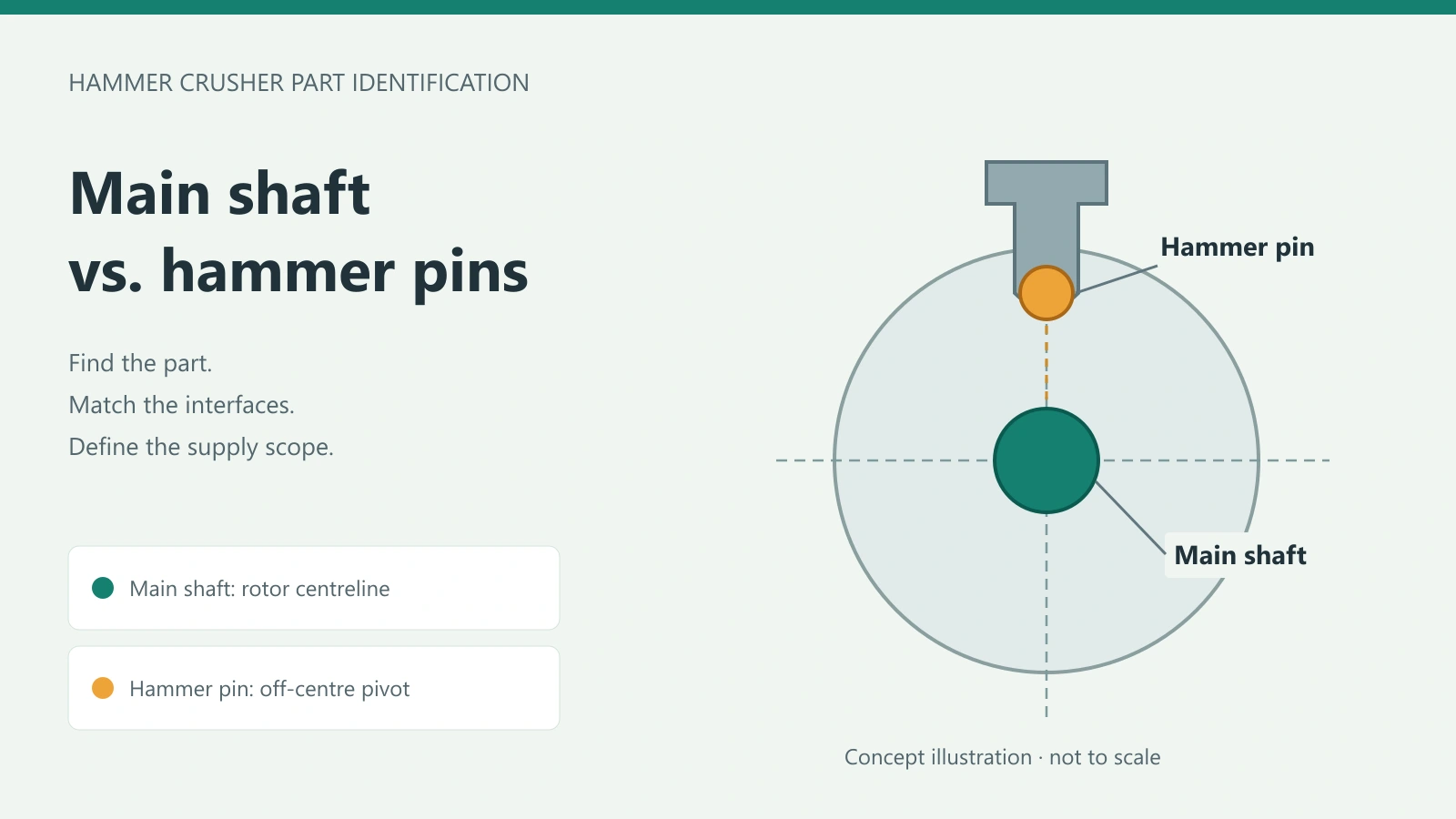
In a hammer crusher rotor with free-swinging hammers, the main shaft is on the rotor centreline, while the hammer pins sit away from that centreline and carry the hammers. Both can look like long shafts, but they belong to different interfaces. A request for a “hammer shaft” therefore needs an installation position before it identifies a purchase item.
Start with three questions: where is the part, what does it fit, and which components are required in the shipment? These establish more than a similar overall length or a material name can.
What is the difference between a main shaft and a hammer pin?
The main shaft, also called the rotor shaft in this context, lies on the rotor’s axis of rotation. Follow that axis through the rotor body or discs and towards the support and drive connections. Bearing seating areas, locating shoulders and the drive-end arrangement help establish its role. The applicable assembly drawing defines the actual connection details.
A hammer pin or hammer bolt follows a different path through the discs and the hammer mounting bores. It provides a pivot for the hammers in the arrangement discussed here. The hammers can swing relative to the pin, while the pin position travels around the main shaft with the rotor. The hammer pivot axis and the rotor rotation axis are therefore distinct.
The HAZEMAG HDS rotor description provides a documented example: a central shaft carries discs, and hammer bolts carry the free-swinging hammers between them. This illustrates the relationship; disc counts, connections and retention details for another machine require its own reference.
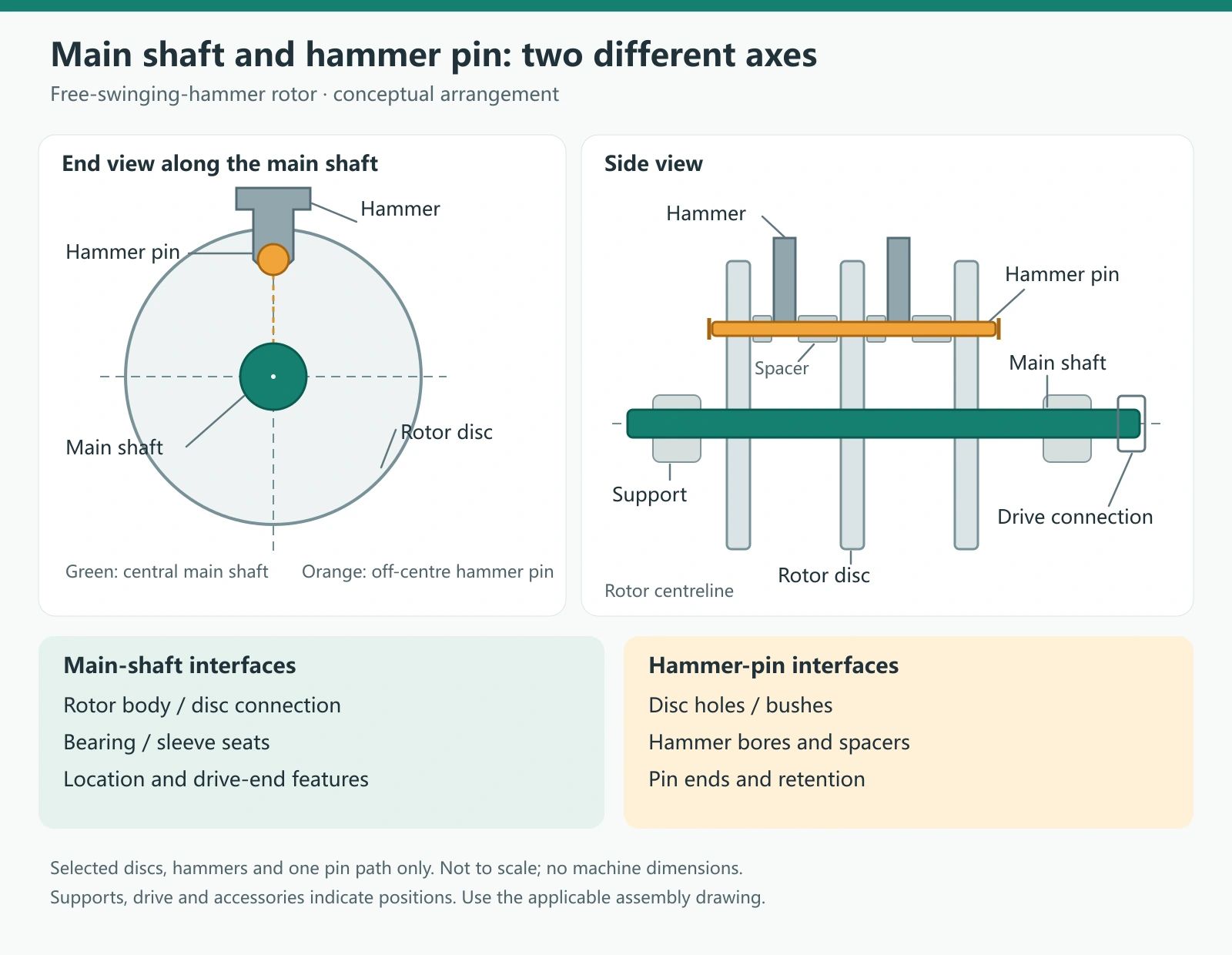
Consider two illustrative positions. Part A runs through the rotor centre and connects towards the supports and drive. Part B passes through off-centre disc holes and hammer bores. Review A as a main-shaft candidate and B as a hammer-pin candidate. These positions help narrow the identification; the actual replacement still needs to match the machine’s assembly reference.
Does “hammer shaft” mean the main shaft?
The name alone does not establish that. Ask which shaft is meant, then mark it on the assembly reference. A shaft through the rotor centre belongs to the main-shaft review; an off-centre pin passing through the discs and hammer bores belongs to the hammer-pin review in the arrangement described here. Keep the name used in the parts book, together with the part reference and marked position, so the enquiry can be matched to the correct item.
Which interfaces must match before ordering a replacement?
For a main shaft, the question is how it fits the rotor, bearings and drive. For a hammer pin, the question is how it fits the disc holes, hammer bores and associated components, and how it is retained. Similar overall lengths do not make the specifications interchangeable.
| Review point | Main shaft | Hammer pin |
|---|---|---|
| Installed position | Rotor centreline and body or disc connection | Off-centre disc holes and the relevant hammer row |
| Radial interfaces | Bearing or sleeve seats; body or disc connection surfaces | Disc holes or bushes; hammer bores or their bushes |
| Axial location | Shoulders, locating faces and specified fixing features | Hammer and spacer arrangement; end retention |
| End details | Actual support-end and drive-end geometry | Pin-end profile and the specified retaining features |
These are review directions, not a list of features present on every rotor. Some interfaces use sleeves or bushes; others do not. Mark the actual components on the same assembly reference so that features from different designs are not mixed.
Also separate as-found measurements from replacement requirements. A worn bearing seat records the shaft’s current condition; it does not recover its original fit. A worn pin section or oval disc hole likewise does not establish the nominal pin diameter and clearance. Where nominal data is missing, label worn areas, preserved areas and unresolved dimensions before comparing the drawing, mating parts or an identified sample.
What is included in a shaft, pin set or rotor assembly?
Part identity is only the first decision. A main shaft, pins with accessories, a rotor disc and an assembled rotor create different supply and inspection scopes. Even “complete rotor” needs an item list.
| Supply scope | What to identify | Boundary to state explicitly |
|---|---|---|
| Main shaft only | Drawing, revision, interfaces, quantity and inspection requirements | Whether bearings, sleeves and drive connection parts are included |
| Hammer pins and specified accessories | Each pin, spacer, bush and retaining item, with its reference and quantity | Whether hammers are included and which accessories will be reused |
| Rotor body or discs | Body, individual disc or specified combination, with position and construction | Whether the design permits separate replacement and whether the main shaft is included |
| Rotor assembled to an item list | Included components, quantities and delivery configuration | Whether hammers, bearings and drive parts are fitted, packed separately or excluded |
Can a hammer pin be ordered without the complete rotor?
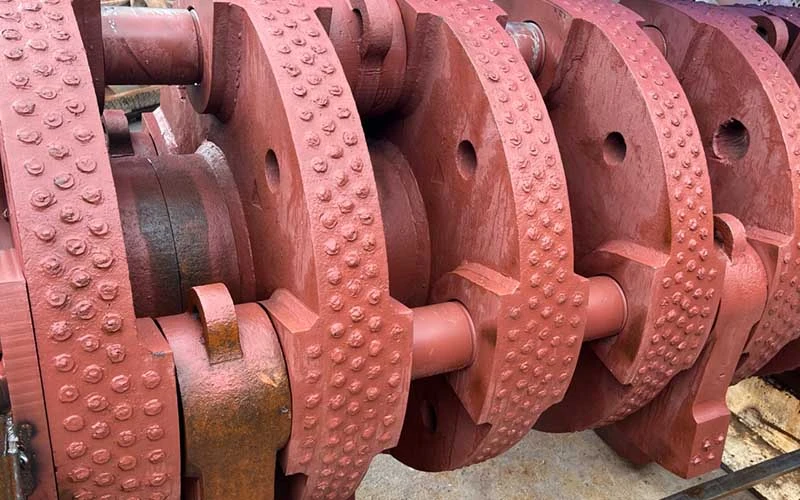
A pin-only supply scope can be defined, but its suitability depends on the actual construction and retained parts. If the existing discs and hammers will remain, review the new pins against those interfaces. Record disc-hole wear and the condition of the retention features separately; buying new pins alone does not establish that the complete arrangement is suitable for reuse. State whether spacers and end retainers are new supply or reused items.
For an assembled rotor, list the body or discs, main shaft, pins, hammers and accessories with their required status. Include bearings and drive parts only when the item list says so. A disc visible on a drawing is not automatically a separately replaceable part; the actual construction determines that boundary.
Which material and inspection records belong to each part?
Once the components are identified, their material, machining and inspection requirements can be discussed individually. One material description should not be assumed to cover a rotor’s shaft, discs, pins, hammers and accessories.
“Alloy steel” does not specify a complete grade and delivery condition. “Forged” describes a manufacturing route without establishing every heat-treatment or surface requirement. Where a drawing calls for local treatment, identify the area and acceptance requirements. A hammer-head material report does not establish the material of a shaft or pin.
Inspection follows the supplied object too. A shaft inspection concerns its specified mating surfaces and geometry. A pin inspection concerns its working sections, ends and retention features. An assembled-rotor inspection also needs a record of which parts were actually fitted.
Individual weight records do not replace a rotor balance report. Schenck’s explanation of dynamic unbalance describes unbalance at different axial and angular positions. The procurement implication is that similar component weights alone cannot establish compliance for an assembled rotor. If balance acceptance is required, agree the configuration, applicable requirements and report content, then check which assembled condition the record covers.
What if you do not have a part number or drawing?
You can begin identification without a complete drawing package. For a suspected main shaft, show the rotor and both end connections. For a suspected hammer pin, mark its path through the discs and hammers and show its end retention. Add the available machine identity, part reference and quantity.
A clearer enquiry than “we need a hammer shaft” would be:
We need replacement pins carrying the free-swinging hammers. Their position is marked on the rotor photograph. We plan to reuse the existing discs and hammers. After reviewing the mating references, please identify the supply scope for the pins, spacers and end retainers separately. As-found wear measurements and known nominal dimensions are labelled separately.
If the identity remains uncertain, say “part identity to be confirmed” and send a photograph with the position marked. For the general evidence package, see How to Identify Crusher Wear Parts Before Quotation.
Use the Hammer Crusher Parts category to review the product range.
If the part identity is uncertain, send the marked position for a shaft or pin identification review. If you already have a confirmed reference, request a quotation for the identified shaft, pins or rotor-component scope. Start with the information available; the enquiry can identify which references still need to be resolved.
Confirm the part first, then its interfaces and item list, so the material and acceptance requirements apply to the goods actually being purchased.